The short version
Svartifoss is a 20 m drop framed by dark basalt columns, in Skaftafell, part of Vatnajökull National Park. You cannot drive to it. Everyone walks from the visitor centre, and the route is well signed.
The park’s own figures put the first stretch at 1.5 km, with 140 m of climbing, to a viewpoint above the falls. From there the path drops into the ravine and crosses a footbridge. Several visitor sites quote about 45 minutes each way. Visit South Iceland gives 1.9 km for the same walk, so treat distances as approximate and judge by time instead.
If you only want the waterfall, you will be back at the car park in an hour and a half. If you have a morning, the loop is better.
The route, step by step
The path starts next to Skaftafell visitor centre. For the first 250 m it runs through the campsite, then turns right and heads uphill through birch woodland.
Follow the signs until you reach the viewpoint above Svartifoss. From there the path goes down into the ravine, over the footbridge and up the basalt column steps on the far side. The park’s loop carries on to the Sjónarsker viewpoint, heads back past Sel, an old turf house, and finishes at the visitor centre via Lambhagi.
The park lists the loop as route S2: 5.8 km, about 2 hours, rated easy, with roughly 250 m of total ascent.
Surface and difficulty
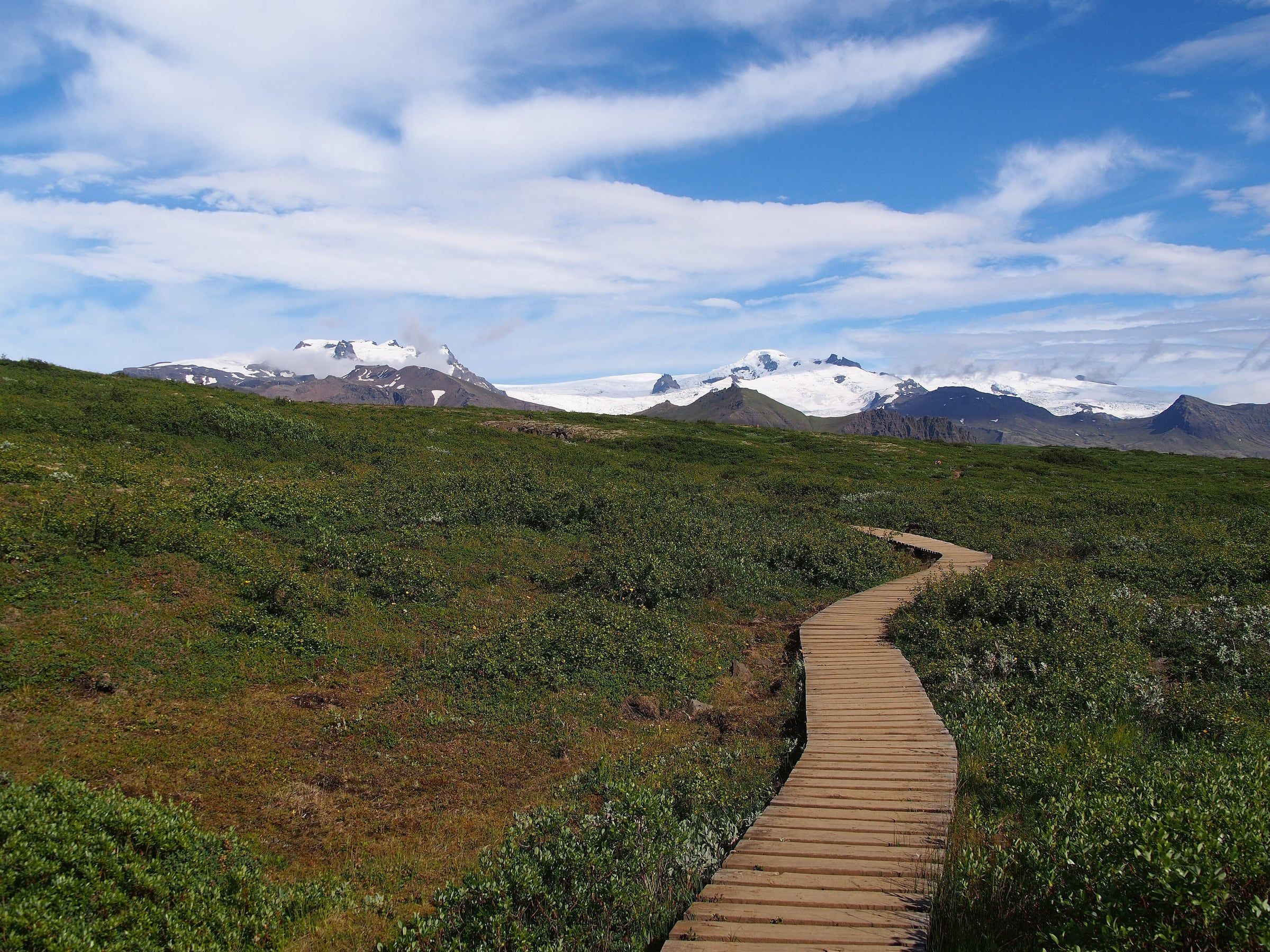
The paths are mostly compacted earth or mats, wide enough for two or three people to walk side by side. There are many wooden steps and platforms, plus stone steps. The park warns that the route can be hard going for anyone with weak legs or poor health, and Guide to Iceland says it is not wheelchair accessible.
“Easy” has a particular meaning here. The park’s difficulty scale grades the surface of a trail. It does not account for distance or how hard the navigation is. Svartifoss is easy underfoot but not flat.
In a wet summer the surface turns slippery. In winter the park says the path can be very slippery or covered in snow.
Waterfalls on the way
The park names two falls that you pass on the loop: Hundafoss and Magnúsarfoss. Guide to Iceland also lists a smaller fall, Þjófafoss, on the same walk. The park does not mention it, so treat that as the guide’s description.
Magnúsarfoss has a small history lesson attached. A power station in Vestragil, below the fall, went into service in 1925 and ran until 1973. It was rebuilt in 2001 to 2003 and is open to visitors. A short path leads there from Lambhagi, and the park suggests it as an add-on to a Svartifoss walk.
At Svartifoss itself, the park dates the lava flow behind the columns to about 300,000 years ago. Wikipedia notes that the columns keep shedding pieces, which leaves sharp rubble at the base. Stay on the paths and viewing areas. Drones are banned around Svartifoss, according to the park’s drone rules.
Loop options and longer walks
- S2, Svartifoss, Sjónarsker and Sel: 5.8 km, about 2 hours, easy. The best all-round choice.
- S6, Svartifoss and Sjónarnípa: 7.1 km, 2.5 to 3 hours, rated challenging, about 310 m of ascent. It follows the Svartifoss path first, then branches to a viewpoint looking towards Skaftafellsjökull and Öræfajökull, and returns via Austurbrekkur. In spring and early summer the park asks walkers to watch for nesting birds.
- S3, Skaftafellsheiði: 16.6 km, 5 to 6 hours, challenging. The park says it is generally impassable in spring because of wet mud and can stay closed until mid-June.
- S4, Kristínartindar: about 18 km, 6 to 8 hours, difficult and for experienced hikers only. It is usually closed from early spring, sometimes into June.
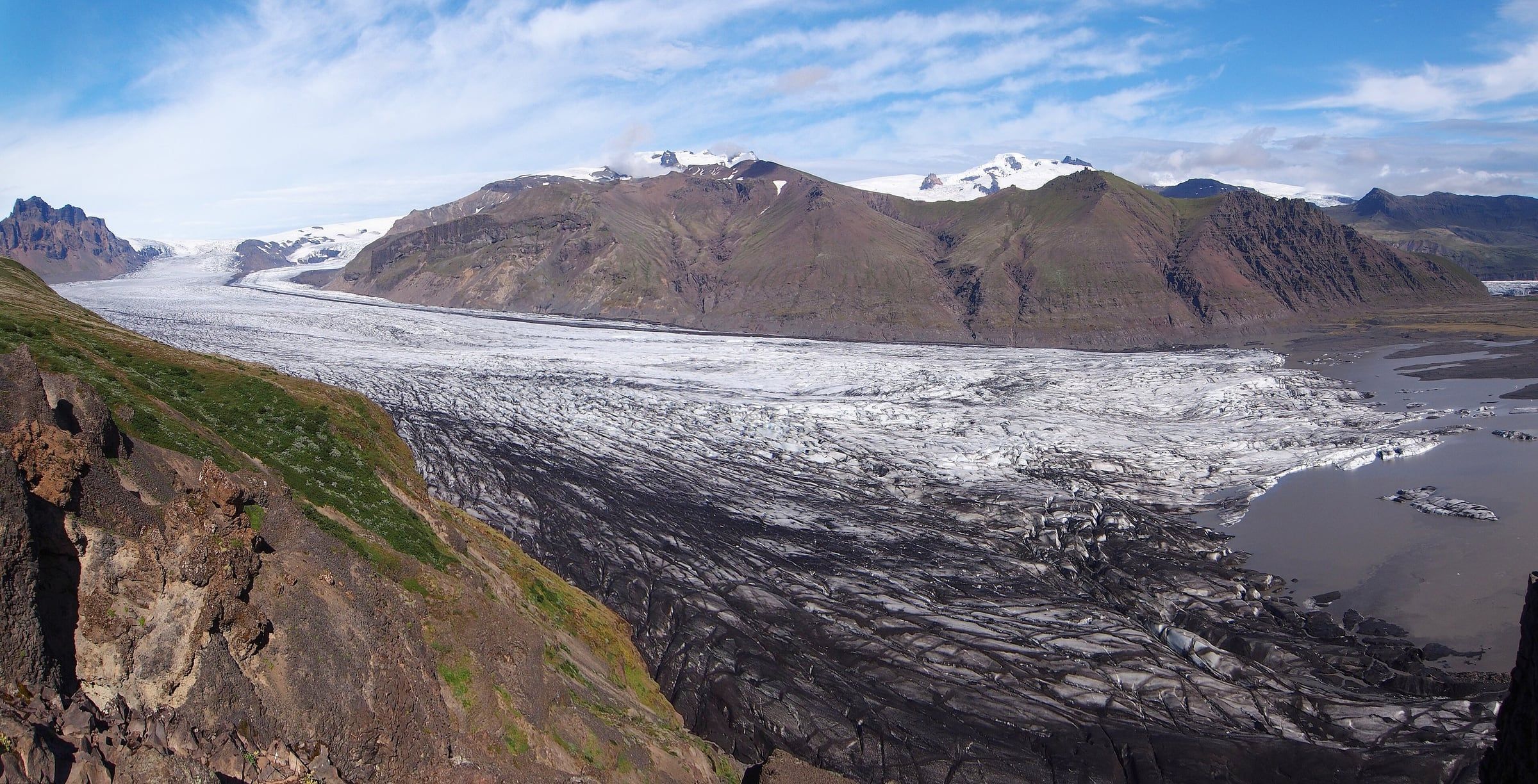
- S1, glacier trail: 4.1 km loop, 1 to 1.5 hours, easy, starting east of the visitor centre. It leads to the glacier Skaftafellsjökull, covered on our Skaftafellsjökull page.
If you want to stand on a glacier rather than look at one, read glacier hikes first. We would not walk onto the ice without a certified guide, and our safety page explains why.
Parking, fees and facilities
The park charges a regional fee for parking at Skaftafell. For a passenger car with five seats or fewer it is 1,110 ISK per day, valid until midnight, with free movement in and out of the area (checked October 2026). Motorcycles pay less, and larger vehicles pay more. You can pay at the machines in the car parks, online or in the Parka app. Cameras read number plates. If you have already paid at another fee-charging area of the park that day, the second fee is halved. Check the current figures on the park’s price list. The campsite charge is separate.
Skaftafell visitor centre is open all year. Its hours follow the seasons: 9am to 7pm from June to August, 9am to 6pm in September and October, 9am to 5pm from March to May and in November, and 10am to 5pm from December to February (checked October 2026). Rangers and staff give trail advice, and there is a small shop. The park says flush toilets are available in the area, along with seasonal services and privately run restaurants. For how to reach the site, see getting there.
Best time of day
Summer is the busiest season, according to the park, and Guide to Iceland says winter has far fewer visitors. The same guide suggests going around midday for photographs, because the gorge shades the falls early and late.
Daylight matters more than the clock. Using timeanddate figures for Höfn, 130 km east, the sun is up for about 21 hours around the June solstice. On 21 December it rises near 11am and sets near 3pm. In winter, start early and carry a torch. The best time to visit page covers the seasons in more detail.
What to wear
Wear sturdy shoes with a good grip, and bring waterproof layers because the falls throw spray. Guide to Iceland also recommends a trekking pole for the steep, slippery sections. In winter the park’s seasons page advises crampons, the clip-on spikes that stop you sliding on ice. Take water and a snack, and pick up a map at the visitor centre.
Nothing here replaces a forecast. Check safety for the weather and road sites to use before you leave.
Make a day of it
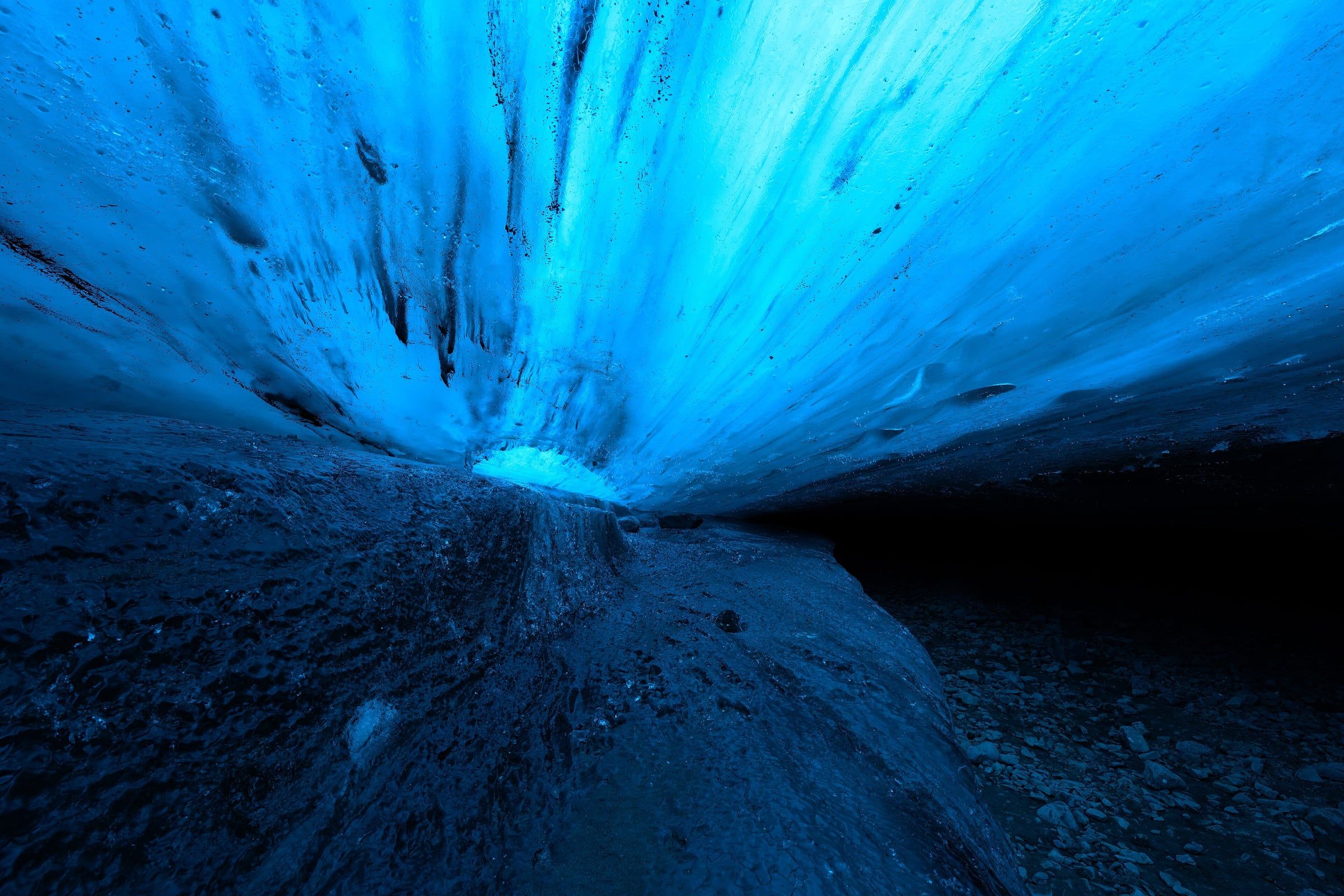
Skaftafell works well as a half-day. For something beyond the path, browse tours around Skaftafell. They include glacier hikes and, in winter, ice cave trips. Nearby sights are collected on our nearby page, including Svínafellsjökull.