The short version
Most visitors to Svartifoss walk for an hour or two and go home with wet boots. The conditions that cause trouble are specific: ice on the path in winter, daylight that ends early, streams that rise after rain, and any attempt to get onto a glacier without training.
Safetravel, the national safety site run by the search and rescue association ICE-SAR, calls weather the biggest concern for outdoor travel. Cold, wind and rain can be dangerous without proper clothing. A few minutes of checking before you set out deals with most of it.
Check the weather and the roads
Use four sites, all free:
- Weather: the Icelandic Met Office publishes forecasts and weather warnings. It has regional forecasts, including South East and South, and links landslide warnings and avalanche forecasts on a separate site, gottvedur.is.
- Roads: road.is leads to umferdin.is, the road administration’s traffic information site. Its traffic service number is 1777.
- Alerts and travel plan: safetravel.is shows current alerts and lets you register a travel plan. Its app gives weather and road updates.
- The park: Vatnajökull National Park posts announcements, and its Skaftafell visitor centre can answer questions on the day. The park office is on 575 8400 (8am to 4pm).
In winter, Safetravel advises checking the forecast at least once a day and conditions on the roads in the morning and several times through the day. The park adds that flooding, sandstorms and snow can affect roads at any time of year.
If something goes wrong
Call 112. If 112 will not connect, Safetravel says to try 599-0112, a backup that it asks you to save in advance because of the 2G and 3G shutdown. From a satellite phone it gives 00 354 570 2112.
The 112 Iceland app lets you contact the emergency centre by text rather than by phone. You choose what is happening, and the app sends your location and the personal details you have stored. It was designed for deaf and hard-of-hearing people and also suits anyone who struggles to speak or describe a situation. The Safetravel app lets hikers send their GPS location to 112.
For anything longer than the Svartifoss walk, file a travel plan on safetravel.is. The park recommends this especially for walkers. Phone signal is patchy in parts of Skaftafell: the park says it is limited at the mouth of Morsárdalur and absent at the bottom, and suggests not walking alone there, or leaving your route with someone who can call for help.
On the Svartifoss trail
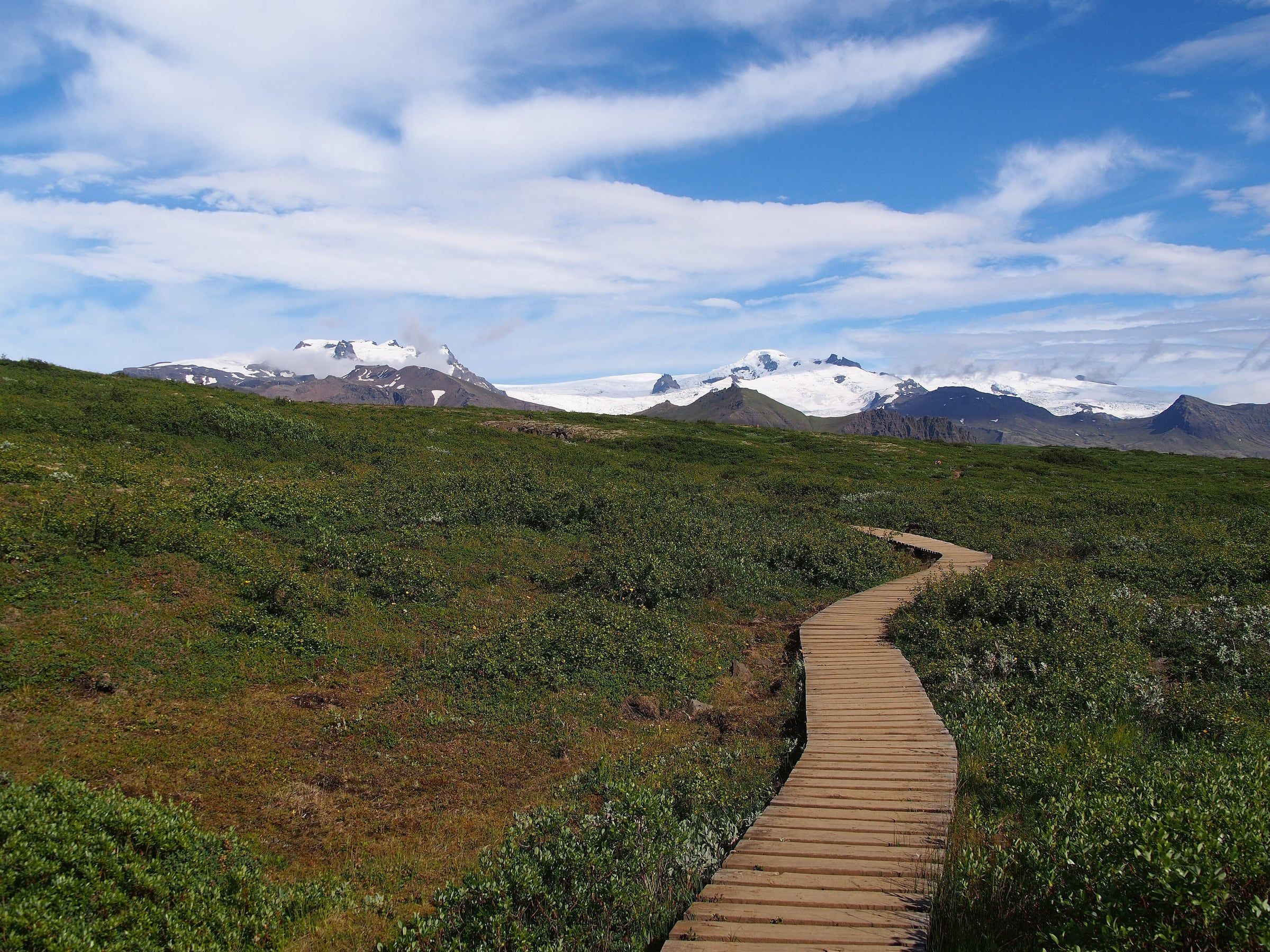
The park rates the Svartifoss loop as easy, but its scale grades the surface only, not distance or the demands of navigation. The path has many wooden and stone steps and platforms. In a wet summer they get slippery, and in winter the park says the path can be very slippery or covered with snow. It also says the route can be hard going for anyone with weak legs or poor health.
Winter footwear matters. The park’s seasons page advises crampons, the clip-on spikes that grip on ice. Daylight is short: using timeanddate figures for Höfn, the sun is up for about four hours around 21 December, rising near 11am and setting near 3pm. Carry a head torch if you might finish late, and tell someone your plan.
Svartifoss sits in a rocky amphitheatre. Wikipedia notes that pieces of the columns keep breaking away, leaving sharp rock at the base. Stay on the paths and viewing areas. We would not stand beneath the columns or climb on them. Drones are banned around Svartifoss under the park’s rules.
For the route itself, see the Svartifoss hike.
Other trails, rivers and rockfall
The park grades trails by surface. A red “challenging” path may include unbridged brooks or small rivers, loose gravel and steep sections, and a black “difficult” path can be hazardous in poor conditions or for the inexperienced.
Water is the main hazard on the longer walks. The park warns that during rain and thaw, small streams in Skaftafell can become raging rivers, and says people have been trapped in the Bæjarstaðarskógur forest because of it. If a route looks unsafe, turn back.
Seasonal closures exist for a reason. The Skaftafellsheiði circuit (S3) is generally impassable in spring because of wet mud and can be closed until mid-June. The Kristínartindar route (S4) is for experienced hikers only, crosses steep scree and is usually closed from early spring, sometimes through June. Obey the signs.
Ice and rock fall near glaciers too. At Morsárjökull the park says hikers can often hear ice falling off the cliff in summer. Keep a good distance from steep faces and glacier snouts.
Glaciers and ice caves
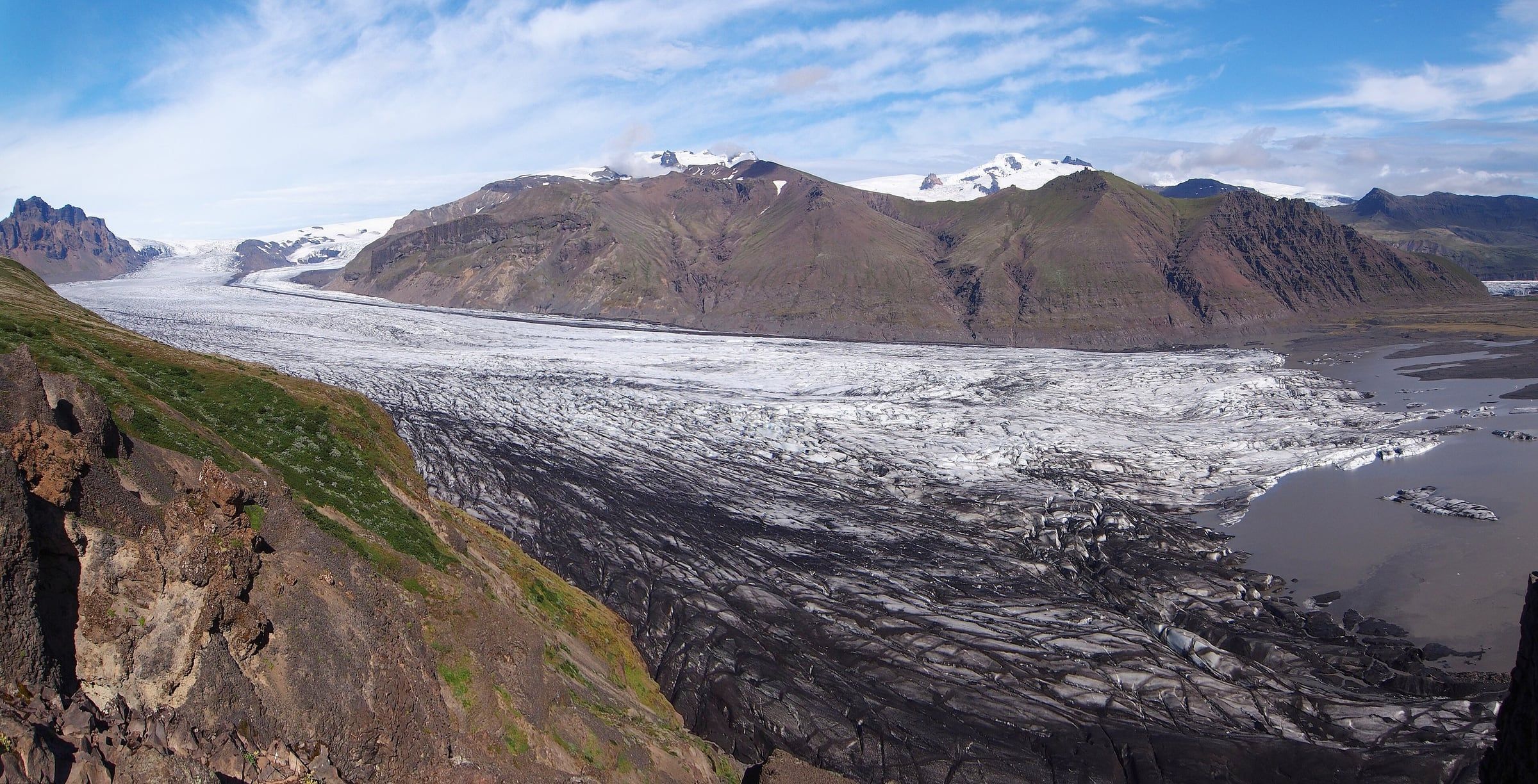
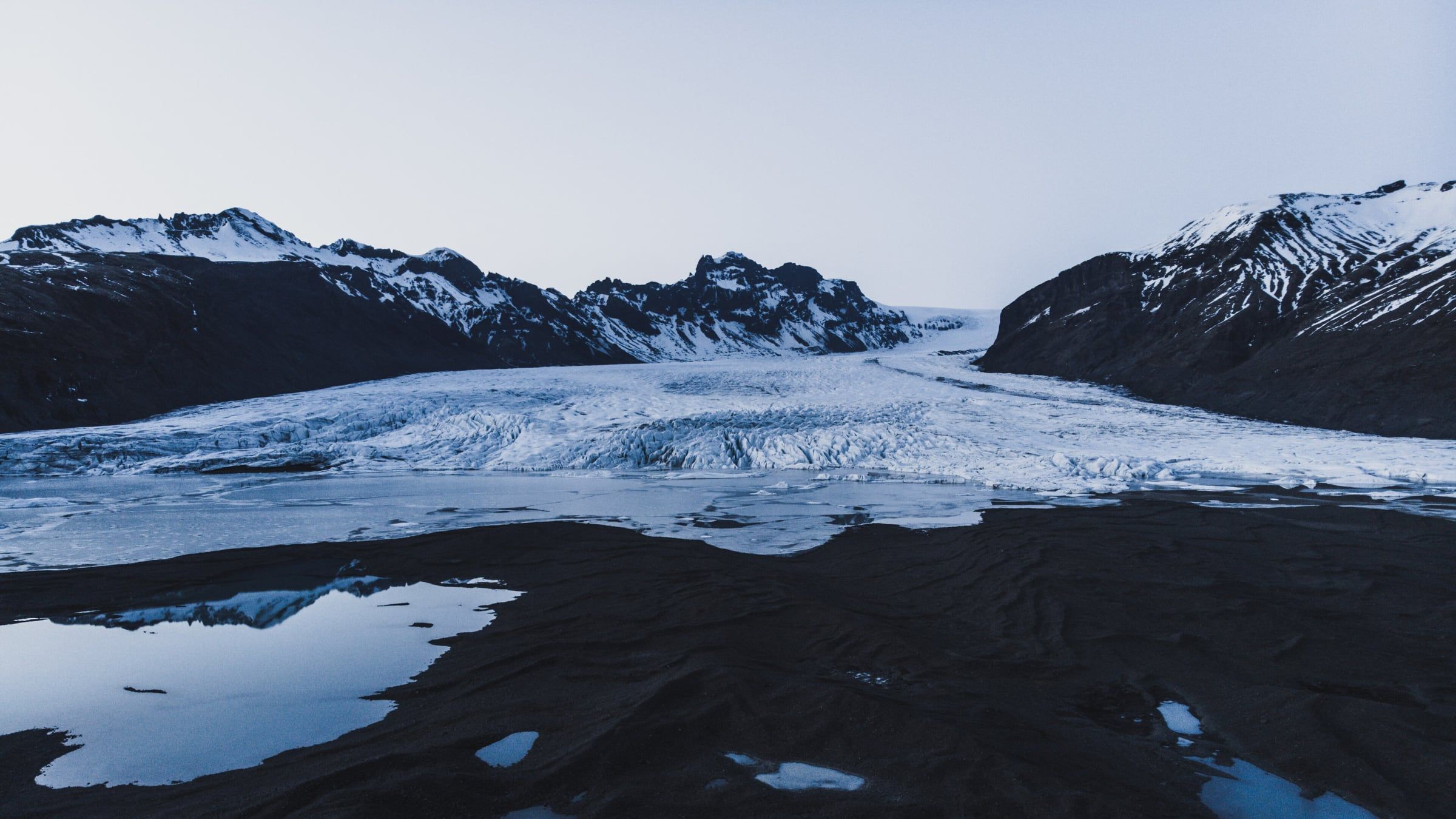
Safetravel says trips to the glaciers are not without danger. Icelandic glaciers are constantly moving, crevasses can appear with limited warning signs, and the weather on the ice can be harsher than elsewhere. It says you should never go on a glacier without experience or the proper equipment, and that hiring a certified glacier guide with knowledge of the area is highly recommended. Its crevasse maps, updated in March 2026, are meant for experienced people planning glacier crossings.
The park gives the same advice for Falljökull, near Skaftafell: take care in front of glaciers and on them, use appropriate safety gear and go with a guide who has experience of glacier walks.
Our advice is simple. Do not walk onto a glacier or enter an ice cave unless you are with a certified guide, and do not treat the ice at the end of a trail as a viewpoint. At the end of the S1 glacier trail the park asks visitors who want to get closer to Skaftafellsjökull to follow the warning sign.
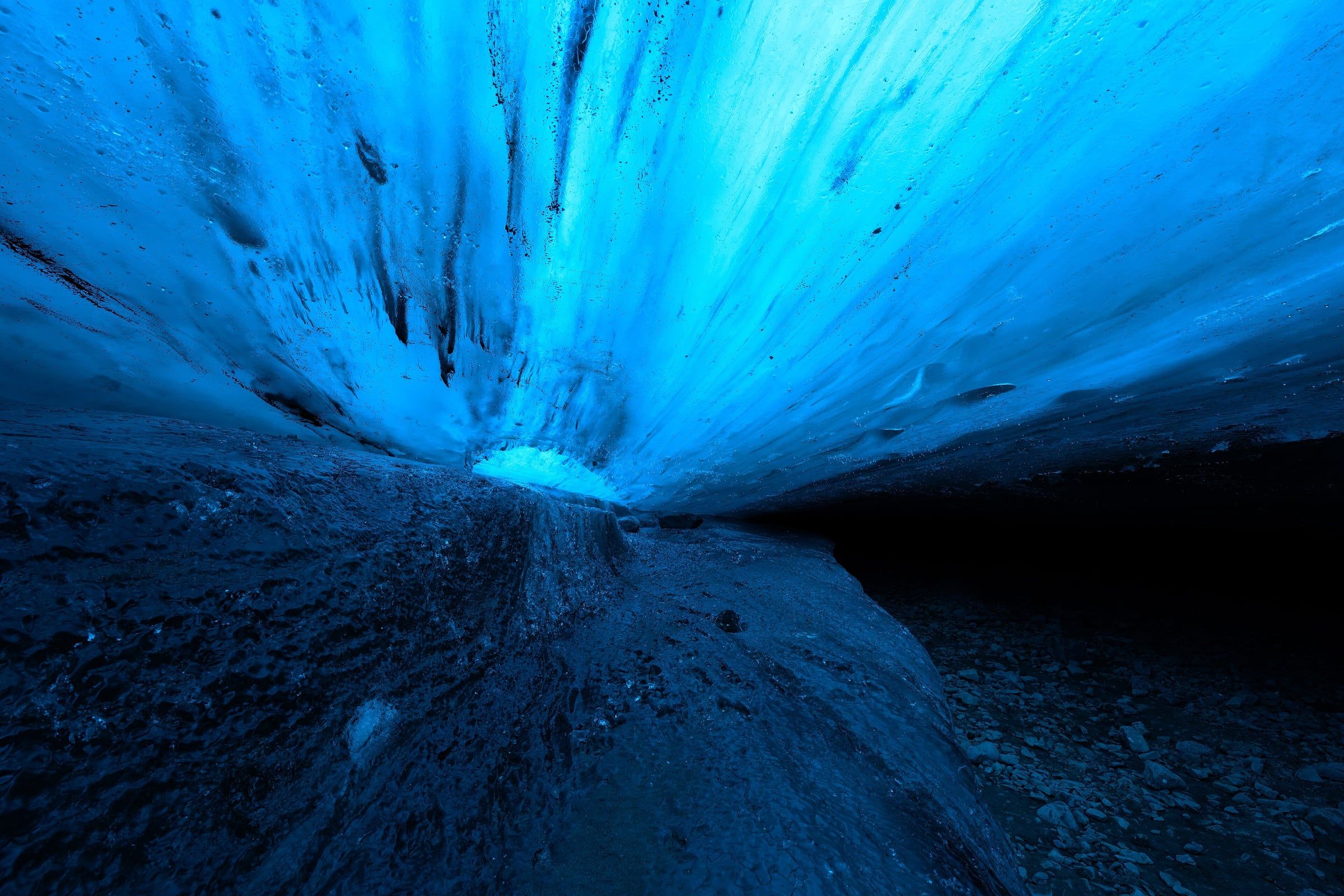
Ice caves need extra care. In September 2024 the park said ice formations under an ice roof, including overhanging, slanted or arched ones, can be extremely dangerous at certain times of year. It said guides need training such as “Jökla 3” or equivalent, plus experience. A separate park notice said the tour company and its guide carry ultimate responsibility for the safety of customers. Those notices are dated, but the point stands. Cave conditions change, and a good operator will cancel when a cave is unsafe. See ice caves and glacier hikes, or browse tours with guided options.
Driving safely
Safetravel’s winter advice applies on Route 1 around Skaftafell. Keep headlights on all year, because the automatic setting may not light the rear lamps. Do not stop on the road for photographs. Slow down for single-lane bridges, where the limit is 50 km/h and the first car there has priority. Slow down before gravel starts, and allow extra time in winter. Off-road driving is banned in the park, with high fines. A 4x4 helps, but it does not stop a skid on ice. See getting there for more.
What to carry
- A waterproof jacket and warm layers. The falls throw spray, and wind and rain are the main weather risk.
- Sturdy shoes, plus crampons in winter and a trekking pole if you want one.
- A charged phone and a spare power bank.
- Water and food, and a map from the visitor centre.
- A head torch in winter.
Walk with someone if you can. Seasons and daylight are covered on our when to go page.