What an ice cave is
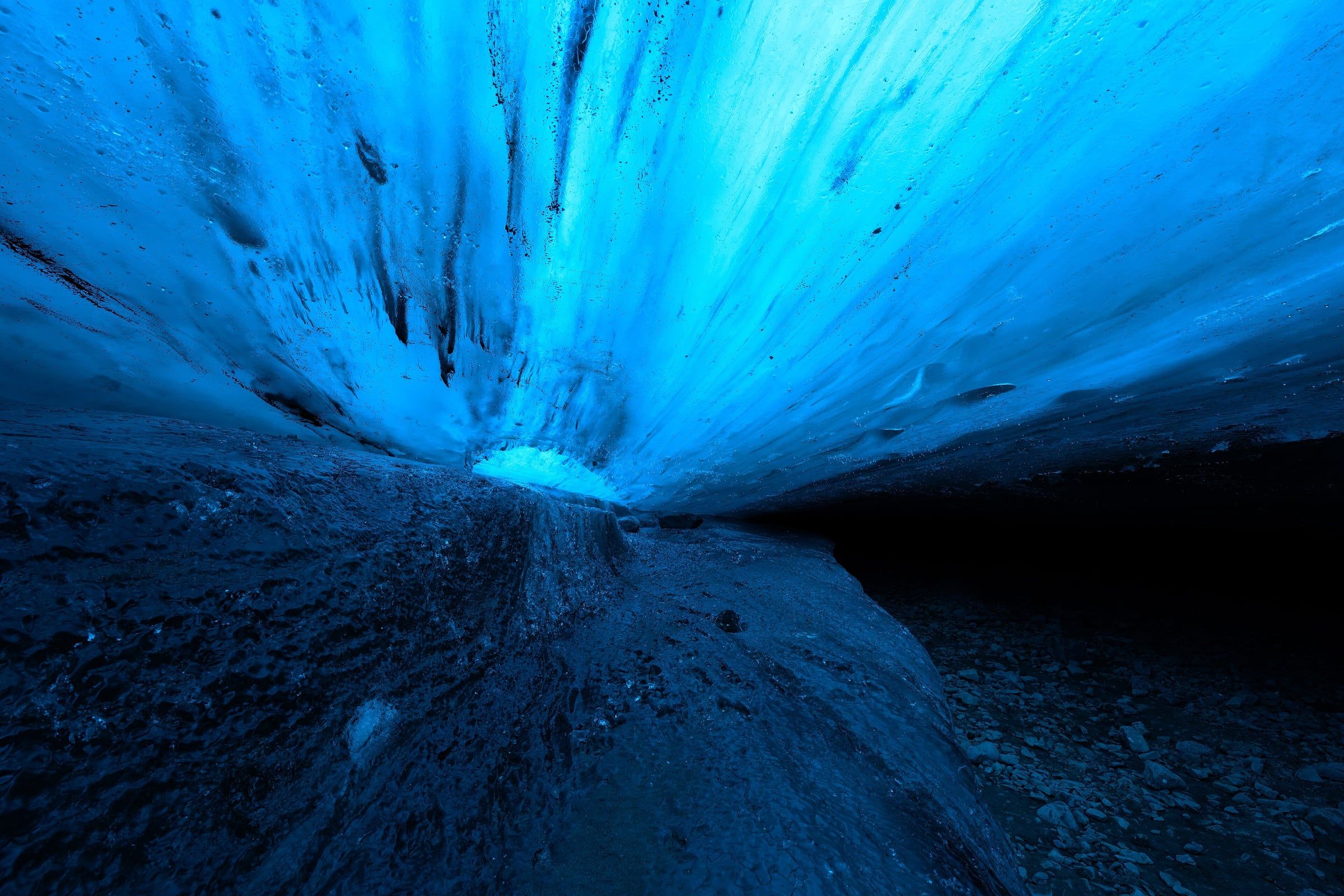
These caves are tunnels and chambers inside the glacier, and they begin as streams. During the warm months water finds a route through or beneath the ice and hollows out a passage. A hard winter freeze can then leave some of those passages stable enough for a guide to take people in. Arctic Adventures describes the same process from the other end: the water under the glacier freezes, and the caves are what remains.
Inside, the ice looks blue because sunlight travels a long way through dense ice, which absorbs more red than blue light. The air is around freezing, often a few degrees colder, and Icelandic Mountain Guides says a typical visit lasts 30 to 60 minutes.
Why every cave is different each year
The caves form quickly, which is why last year’s photos may show caves that are gone. Local Guide of Vatnajökull lists caves it visited in past seasons that no longer exist or are inaccessible. It says the name “Crystal Ice Cave” has been used for several different caves over the years.
The first weeks of a season are the least predictable. On 13 October 2026, Local Guide said its season had opened on 1 October and that it was too early to confirm which caves and routes would be included. Its main cave then was Verdandi on Breiðamerkurjökull, about 200 metres long and up to around 15 metres wide, with two large meltwater shafts in the ceiling. The operator said reaching it took around 2 km of walking each way, that the interior was mostly dark ice with some blue sections, and that the ground was muddy. That may well have changed by the time you read this, so check the operator’s current report.
No month guarantees a particular colour or shape of cave, Local Guide says.
When the season runs
| Activity | January | February | March | April | May | June | July | August | September | October | November | December |
|---|---|---|---|---|---|---|---|---|---|---|---|---|
| Ice cave tours from SkaftafellTroll and Arctic Adventures say October to April; Icelandic Mountain Guides lists October to May | Runs in January | Runs in February | Runs in March | Runs in April | Not in May | Not in June | Not in July | Not in August | Not in September | Runs in October | Runs in November | Runs in December |
| Ice cave tours from JökulsárlónIce Explorers says October to April; Local Guide usually October to March | Runs in January | Runs in February | Runs in March | Runs in April | Not in May | Not in June | Not in July | Not in August | Not in September | Runs in October | Runs in November | Runs in December |
| Glacier hikes (for comparison)Main Falljökull hikes run all year | Runs in January | Runs in February | Runs in March | Runs in April | Runs in May | Runs in June | Runs in July | Runs in August | Runs in September | Runs in October | Runs in November | Runs in December |
| Lagoon amphibian boat (for comparison)May to November; the operator's FAQ says early May to October | Not in January | Not in February | Not in March | Not in April | Runs in May | Runs in June | Runs in July | Runs in August | Runs in September | Runs in October | Runs in November | Not in December |
The season is now set by the park. The Reykjavík Grapevine, reporting the broadcaster RÚV, said in September 2025 that the ice cave season begins in October and that caves are closed from May through September. Companies assess the caves daily and share information, and the national park agency can limit visitor numbers if queues build up. Local Guide says its tours normally run from October to 31 March, occasionally starting earlier or continuing into April depending on weather. One operator lists May, but the park’s rule means April is the safer end date to plan around.
Christmas and Easter are popular, so expect to share a cave with other groups and possibly wait.
Skaftafell or Jökulsárlón
The two bases are about 45 minutes apart by road, according to Troll Expeditions, so choose by where you are sleeping and how much you want to walk.
From Skaftafell. These tours combine a Falljökull glacier hike with a visit to a natural cave. Troll’s takes about four hours, with roughly two hours on the glacier. Arctic Adventures’ covers about 3 km with 200 to 250 metres of climbing, starts with a steep section and spends 1.5 to 2 hours on the hike and cave together. Icelandic Mountain Guides’ version takes three hours with two on the ice. Minimum ages are 8 at Troll and Arctic Adventures and 10 at Icelandic Mountain Guides. You get a proper glacier walk as well as the cave, but the day is more active.
From Jökulsárlón. These meet at the lagoon and use a modified 4x4 or super jeep to reach the edge of Breiðamerkurjökull, a drive of 25 to 40 minutes. The tours last about three hours, and the walk on foot depends on the cave in use: Ice Explorers describes 500 to 1,000 metres, while Local Guide described a longer approach in October 2026. Minimum ages run from 7 at Ice Explorers to 10 at Local Guide. They are usually the easier choice for families.
Longer tours. Ice Explorers’ 5-to-6-hour tour covers 4 to 6 km of hiking and visits more remote areas, with a minimum age of 13 and no more than eight people per guide. Local Guide’s 5-to-7-hour Ice Cave Discovery sets 16, takes up to eight people per guide and asks for 72 hours’ notice to cancel. They suit fit adults who want a quieter day, though they still cannot promise to avoid other groups.
What to expect physically
You wear a helmet and crampons, and your guide briefs you before you enter, including what to do if ice falls. Local Guide says to be comfortable walking outdoors for several hours on uneven, icy, snowy or gravel-covered ground. Inside, expect ice, damp and sometimes mud.
Wear boots with ankle support and thick socks. Bring warm gloves, a hat that fits under the helmet and a small backpack for extra layers, water and snacks. Icelandic Mountain Guides recommends the same, and says tours include helmets, crampons and harnesses. Icelandic Mountain Guides says you need to be able to walk distances on most tours, so ask the operator before booking if you have mobility concerns.
Photography
Plan for light, not tricks. The colour of the ice changes with the weather, the time of day and the lighting, according to Arctic Adventures and Local Guide, so a cave can look quite different from photos you have seen. You usually have time inside for pictures, but you will often share the space, so be ready to wait your turn.
Keep your phone or camera inside your jacket until you need it, because cold drains batteries, and bring gloves that let you use a touchscreen. Tell the guide before you stop to photograph so the group stays together.
Summer alternatives
From May to September the park keeps natural ice caves closed. In summer, do a glacier hike, which runs all year, or take a boat on the lagoon. Troll Expeditions says the Katla ice cave in Mýrdalsjökull is open all year and departs from Vík, which Icelandic Mountain Guides puts about 2.5 hours’ drive from Skaftafell. It is outside the area this site covers, so check the operator’s page.
Safety
Never enter an ice cave without a certified guide. In 2024 the park’s board decided that a group of operators and the Association of Icelandic Mountain Guides would carry out daily site assessments, and it noted that the safety of customers is ultimately the responsibility of the tour company and the guide. The park’s rangers at Breiðamerkursandur look after the caves in Breiðamerkurjökull. The Grapevine says the park tightened its rules after a fatal accident on Breiðamerkurjökull. Read our safety page for the wider picture, and see the tours page to compare ice cave tours with glacier hikes and lagoon trips.